

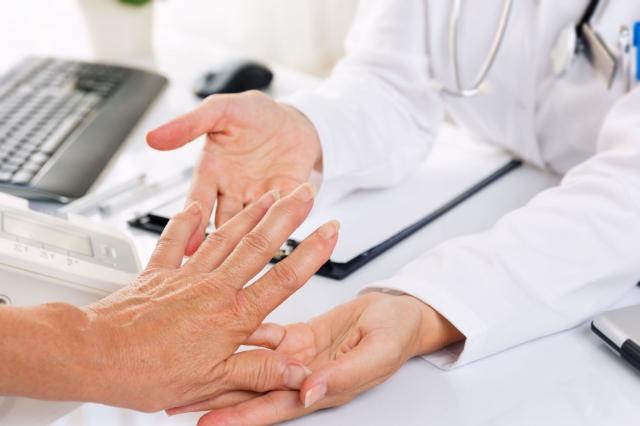
Living with arthritis is a throbbing task as it obstacles many routine activities. Arthritis is the inflammation of joints, it may affect a single or many joints within a body, and have many faces. Treatment for arthritis depends on the type with which the patient is affected. On a global scale above 350 million people are affected by arthritis most of them are females with osteoarthritis, the most common form found so far.
How does it transpire? Reasons behind arthritis and adhered symptoms
The disease originates from joint stiffness and mild pain, leading to inflammation, swelling, redness, and unbearable pain. If ignored further, it may cause a lost range of motion. So consult an orthopedic doctor before it’s too late. However, these are the common signs but each type of arthritis has some peculiar symptoms. The causes behind each form decide the form of arthritis. For example, osteoarthritis is caused because of the wear and tear of bone cartilage whereas in rheumatoid arthritis joints are attacked by the immune system. Accumulation of uric acid crystals in the joint causes gout. Moreover, a joint infection can also cause certain types of arthritis.
Factors that may lead to arthritis
- Age is the major factor because as we grow the bones gradually lose regeneration power and disintegrate more. This head towards bone weakening causes osteoarthritis.
- Some sorts of arthritis are hereditary and travel in the family therefore a person may develop arthritis if parents or any of the siblings have this issue.
- Some forms of arthritis are gender-related like rheumatoid arthritis occurs more in women than in men. On the other hand, gout is found more in men than women.
- An injury to the joint may also be a kick start to arthritis. It develops eventually if proper care is not given to the injured joint.
- Increased body weight or obesity is another risk factor to mind. Excessive body weight put stress on weight-bearing joints such as knees and hips causing wear and tear which leads to arthritis.
In what way it can be crucial?
Your hands, arms, knees, hip, and almost any joint can be affected by arthritis which depreciates joint health gradually reaching a point when a patient is unable to move the joint and unbearable pain hinders daily tasks. This arises a feeling of depression and anxiety which lowers the quality of life. In severe cases, joints slowly lose alignment and shape is deformed. Consultation with an orthopedic doctor is inevitable in this situation.
Procedures to diagnose arthritis
The treatment for arthritis begins the day its type is diagnosed by an orthopedic doctor. The diagnostic procedure involves certain significant laboratory and imaging tests, but at first, a physical examination is performed as you reach the consultant.
Physical examination
The orthopedic doctor looks for visible signs through physical examination such as redness, swelling, warmth and tenderness around the affected joint. Then he checks the joint range of motion through assertive and non-assertive movement.
Laboratory tests
Your doctor may order a few laboratory tests that include urine or blood test. This help to analyze an agent responsible for arthritis like a high uric acid level is the reason for gout. Fluid from the affected joint may also be derived to check for infections.
Imaging tests
Internal verification is made through imaging tests as they give a pictorial view of the internal joint structure. Wear and tear to cartilage, bone or ligaments are easily detected through such examinations. Types of imaging tests include:
- X-rays
Bone spurs, cartilage and bone damage can be easily seen through an x-ray. However, this imaging test may not detect arthritis in the early stages but can help track its progression.
- MRI
Magnetic resonance imaging or MRI uses a combo of radio and magnetic waves to get internal images over a computer system. The cross-sectional images let the orthopedic doctor reach the root cause by eliminating other suspects. It also reveals the condition of soft tissues such as ligaments, tendons, and muscles.
- CT scan
Computerized tomography or CT scan takes multiple x-rays from various angles and converges them to produce different internal views in detail. CT scan detects the damage that occurs to bones and tissues.
- Ultrasound
With the use of sound waves fluid containing structures like bursae, soft tissues, and bone cartilage can be detected by this technology. Moreover, ultrasound also assists in guiding a needle into the joint for fluid removal or some medicine inoculation.
Suggested treatments by orthopedists
Treatment for arthritis depends on the nature of the disease and the severity it reaches. The major focus is to relieve pain and improve joint motion. An orthopedist after examining his patient lay out the most effective treatment strategy which may include:
Medications
Medicines should be strictly taken under the doctor’s prescription to prevent adverse effects or reactions. These may include:
- Oral medicines for reducing crucial symptoms such as pain and inflammation.
- Topical ointments to apply directly over the affected joint for quick relief.
- Corticosteroids, which can be in the form of pills to take orally or may be injected into the arthritic joint to relieve pain and slow down joint disintegration.
- DMARDs or disease-modifying antirheumatic drugs are used to slow down rheumatoid arthritis progression and save from permanent joint damage.
Therapies
For self-care, at home, an orthopedic doctor mostly suggests RICE therapy i.e. rest, ice, compression, and elevation. Give rest, and don’t put stress on affected joints. Cold compresses help to relieve pain and inflammation. Use a compression bandage to compress the joint and in many cases doctors may recommend a brace or splint for support. Elevating the affected joint help reduce swelling.
Physical therapy is suggested to strengthen joints and regain their lost motion. It should be performed under the guidance of an expert like a physiotherapist who designs a therapy to target arthritic joints specifically.
Surgery
Surgery is planned as a last resort when other methods don’t work to manage symptoms and pain is unbearable. Procedures mostly conceived comprise:
- Joint fusion
Mostly performed over smaller joints like those of the wrist, fingers, or ankles. The end of bones forming a joint is removed and both ends are tied together surgically until the bones fuse to form a single rigid body. This method eradicates the joint fixing it permanently and deprive of motion.
- Joint repair
It is an arthroscopic procedure to smooth out damaged joint surfaces and realign them for frictionless gliding.
- Joint replacement
Joint replacement is the last solution where the whole damaged joint is removed and replaced with an artificial or prosthetic one. Hip and knee joints are the ones that in most cases need to be replaced. Joint replacement surgery is an effective solution to manage pain and improve joint motion.
Concluding lines
It is commendable to work on your lifestyle so joint diseases like arthritis don’t upsurge. Maintain a healthy body weight, exercise to empower joints, and eat healthy calcium-rich food to build strong bones. Still, if joint pain bothers you, don’t delay, seek immediate guidance from an orthopedic doctor to start treatment.